My main project : Writing the history of clearing
For several years now, my project has been to write a history of the ideas and facts surrounding the establishment and operation of what has been called “clearing.” Clearing agreements began in late 1931 in the form of bilateral agreements aimed at reducing, or even eliminating, the use of convertible currencies in trade between countries suffering from a shortage of such currencies. These agreements continued to evolve until they became a veritable paradigm in Europe. Faced with this necessity, many economists felt the need to temporarily develop a payment architecture based on interstate clearing, while others—though fewer in number (such as Keynes or Triffin)—viewed it as a more sustainable framework. After World War II, Western economies were driven by the desire to preserve certain benefits of clearing (trade integration, liquidity optimization) while pursuing an agenda of trade liberalization and a return to currency convertibility. Clearing remained in place until the 1950s, but it had to be dismantled. This was the task undertaken by the European Payments Union.
Studying clearing allows me to bridge the history of economic thought and economic history, while also fostering reflections that extend to monetary theory, trade policy, and international economic relations.
Most of my publications are related to this project, and I am currently working on a book on the subject, which will enable me to summarise my research.
Related events
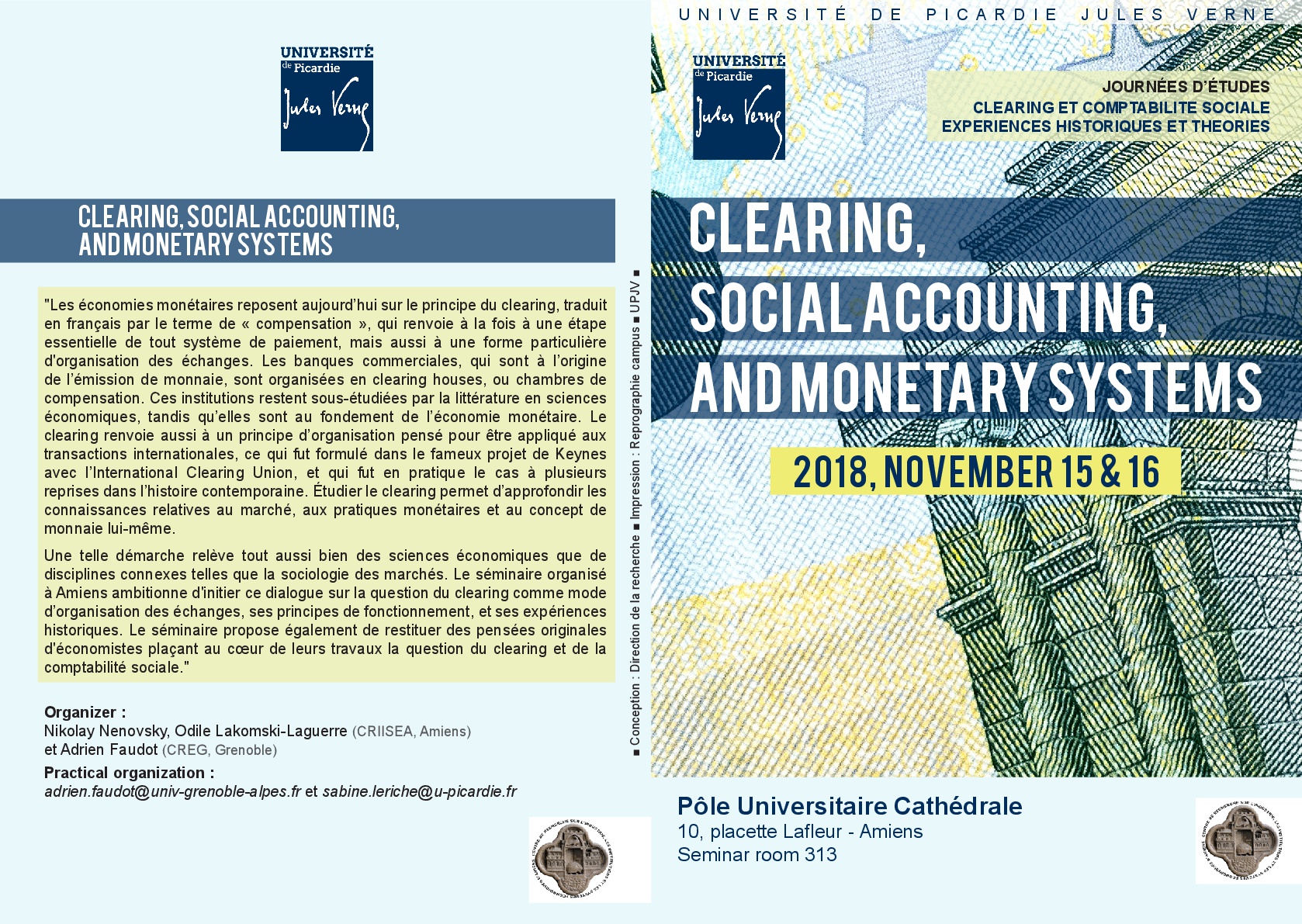
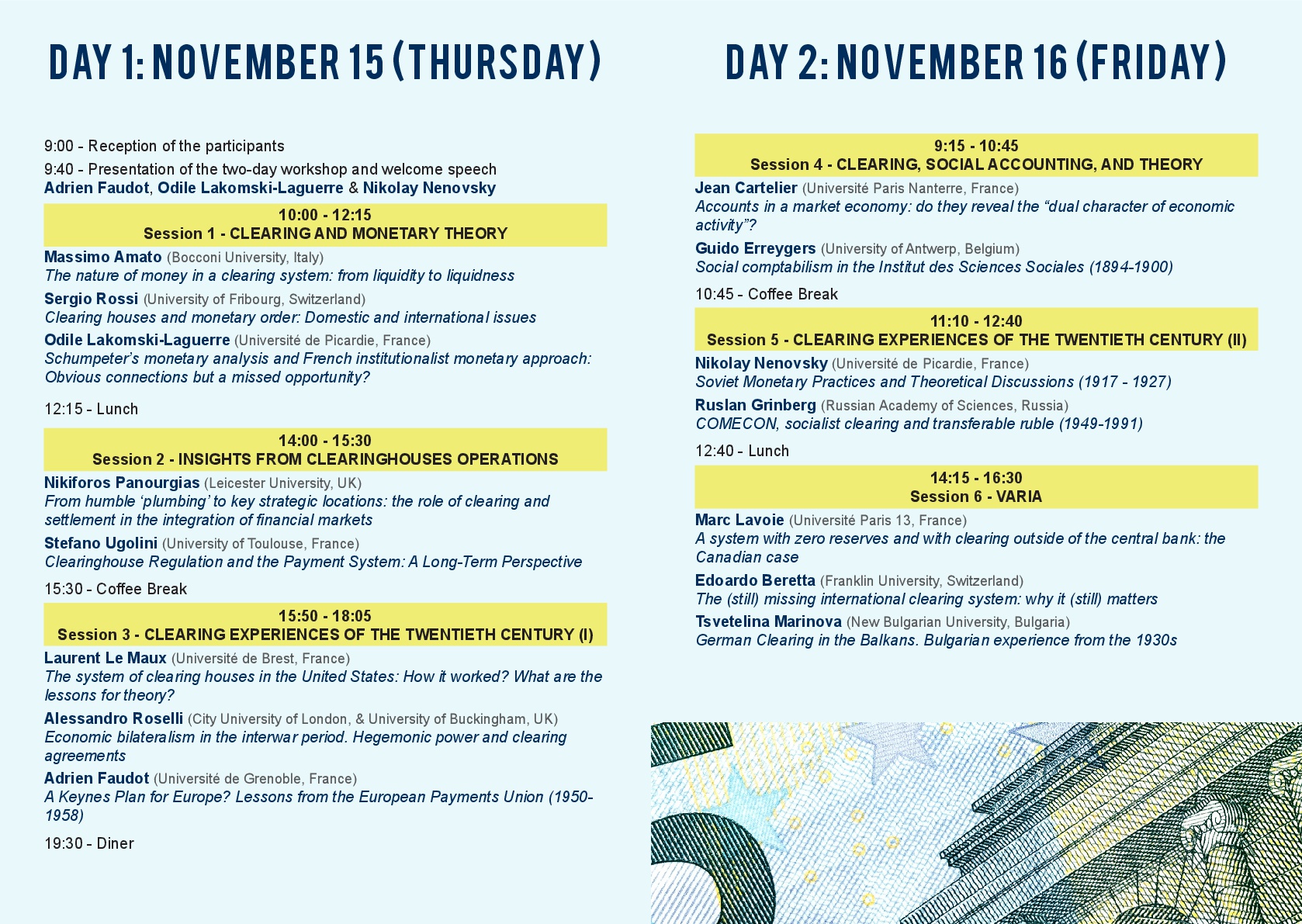
As part of this project, I organized a conference in Amiens in 2018 (with Nikolay Nenovsky).
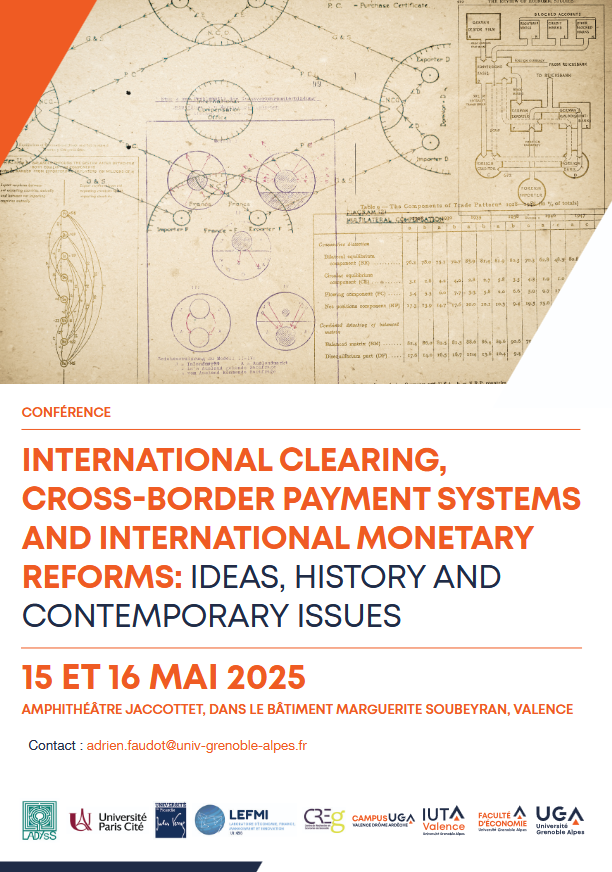
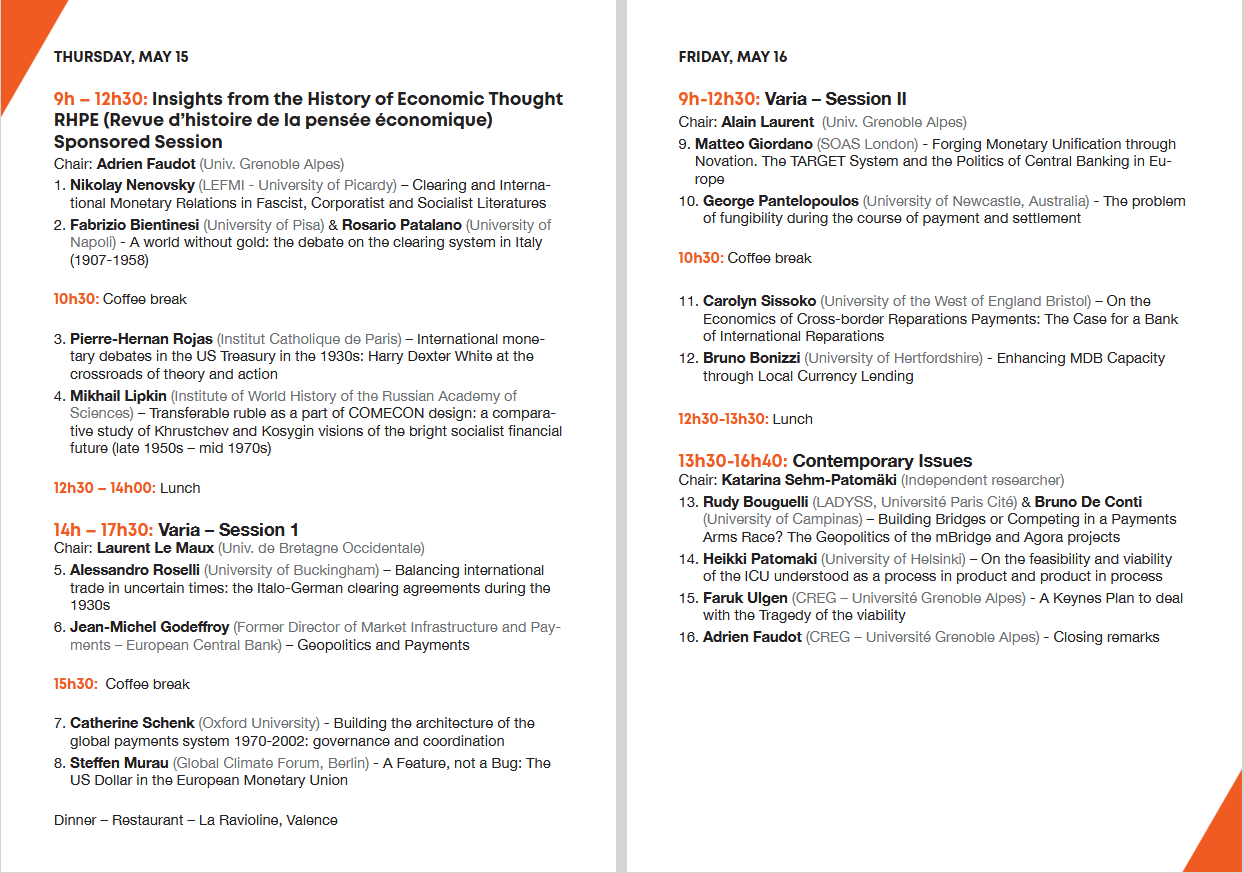
I organized another conference in Valence in 2025 (with Rudy Bouguelli and Nikolay Nenovsky).